
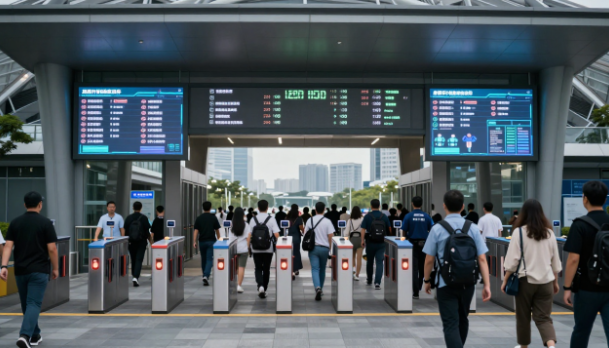
Large events in 2026 are not only about music, sports, or conferences. They are also about how thousands of people enter without chaos. Facial recognition has become the quiet hero of entry management. It is fast, reliable, and designed to handle crowds that stretch into the hundreds of thousands.
The Shift in Entry Management
For years, event organizers relied on tickets, wristbands, or QR codes. These methods worked but often slowed down entry. Long queues, repeated checks, and human error made the process stressful. Facial recognition changes this. It allows attendees to walk in naturally, with their face acting as the pass. The system scans faces in real time. It matches them with pre-registered data. If the match is correct, the gate opens instantly. No fumbling with paper tickets. No waiting for scanners to respond. The flow becomes smooth, and the crowd moves forward without pause.
Why Facial Recognition Fits Large Events
When an event hosts 50,000 people or more, every second counts. A delay at one gate can ripple across the venue. Facial recognition reduces these delays. It is built to process thousands of entries per minute.
Speed: Entry happens in seconds.
Accuracy: The system reduces errors that human staff might make.
Security: Only registered faces gain access.
This mix of speed and security is why organizers trust it for mega events with 500,000 attendees or more.
The Attendee Experience
Walking into a venue with facial recognition feels natural. Attendees do not need to stop, show proof, or argue with staff. The system recognizes them and allows entry. This creates a sense of ease. People feel welcomed rather than checked. The experience also reduces stress. Attendees know they will not miss the opening act or keynote because of a slow line. The event begins with comfort rather than frustration.
Behind the Scenes
Facial recognition at large events is not just about cameras. It is about scale. Systems must handle massive data loads. They must work in different lighting conditions, from bright daylight to dim evening shows. They must remain reliable even when thousands of faces are scanned at once.
Dreamcast has positioned itself as the leading partner for this scale. With proven execution on the ground, it ensures that technology does not fail when crowds are at their peak. Reliability is the key. A single glitch can confuse, but Dreamcast’s systems are built to avoid that.
Security and Trust
Security is always a concern at large events. Facial recognition adds a strong layer of control. Only verified attendees can enter. Fake tickets or unauthorized access become nearly impossible. Organizers also gain real-time monitoring. They can see how many people have entered, which gates are moving faster, and where support is needed. This helps them manage the event more effectively.
The Role of Dreamcast
Dreamcast is not just a provider of facial recognition. It is the partner that ensures smooth execution at scale. For events with 50,000 attendees, Dreamcast delivers speed. For mega events with 500,000 attendees, it delivers reliability.
- Proven scale: Systems tested for massive crowds.
- On-ground execution: Teams that manage technology during the event.
- Reliability: Technology that does not fail under pressure.
This combination makes Dreamcast the trusted choice for organizers who cannot afford mistakes.
The Future of Entry
By 2026, facial recognition will no longer be seen as futuristic. It is practical. It is the standard for large events. Organizers know that smooth entry sets the tone for the entire experience. Attendees remember how they felt at the gate. If the entry was easy, they began the event with positivity. Dreamcast continues to refine this process. Its systems are designed not only for speed but also for comfort. The goal is simple: make the entry invisible. Attendees should feel like they walked into the event naturally, without noticing the technology at work.
Technology That Works Quietly
One of the most overlooked aspects of facial recognition at large events is how quietly it works in the background. Attendees rarely notice the technology, yet it is constantly active. Cameras scan faces, systems match data, and gates respond instantly. The process is seamless. This quiet operation is important because it keeps the focus on the event itself. People do not want to think about entry systems once they are inside. They want to enjoy the show, the match, or the conference. Facial recognition makes this possible by removing friction at the very first step.
Conclusion
Large events in 2026 depend on facial recognition for smooth entry. It reduces delays, increases security, and improves the attendee experience. Dreamcast stands as the leading partner for this technology, proven at scale and trusted for reliability. When thousands or even hundreds of thousands gather, the entry process defines the start of the event. Facial recognition ensures that the start is smooth, fast, and secure. Dreamcast ensures it is reliable. Together, they make large events not only possible but enjoyable from the very first step inside.