
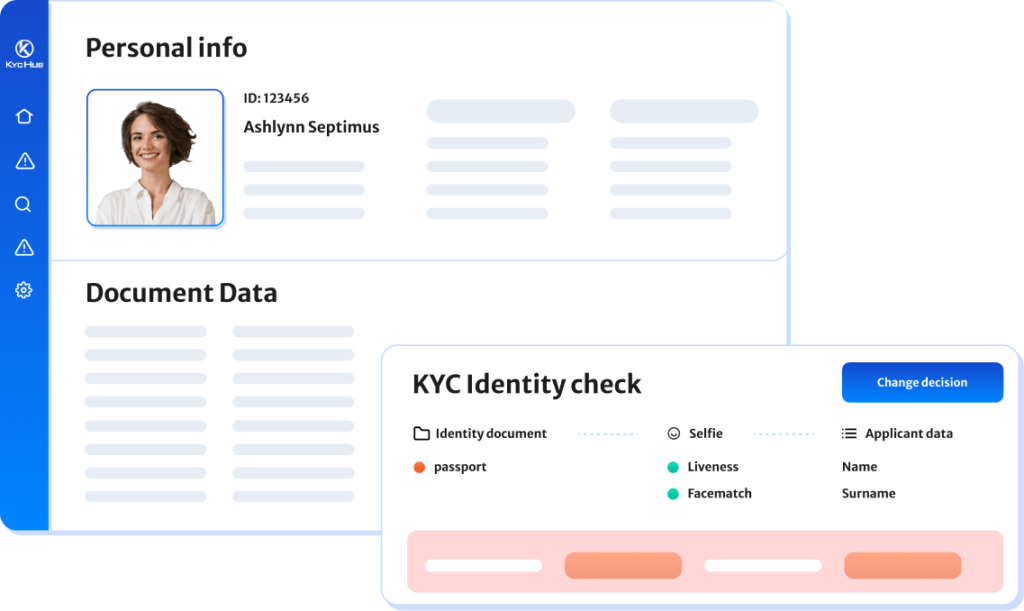
In the digital age, adherence to compliance standards is crucial, especially for industries like banking, insurance, and investments. A term frequently heard in this context is “KYC.” With advancements in technology, processes like Video KYC have gained prominence, significantly enhancing the ease and efficiency of Know Your Customer protocols. In this article, we’ll explore the KYC full form, delve into Video KYC, and explain how it works in India.
What is KYC?
The KYC full form is Know Your Customer. It refers to a process adopted by institutions like banks, financial services, and other regulatory bodies to verify and authenticate the identity of their customers. KYC ensures that the financial systems are secure and helps in mitigating risks like money laundering and fraud.
The Reserve Bank of India (RBI) mandates KYC procedures for customers, and as per regulations, individuals must fulfill KYC requirements when opening accounts, investing in financial instruments, or undertaking significant transactions. The process collects essential customer data, such as identity proofs (Aadhaar, PAN, Passport, Voter ID) and address proofs to verify their authenticity.
The Evolution of KYC in India
Over the years, the KYC process has evolved considerably. Initially, it was dominated by physical verification, where customers submitted physical documents and visited offices to complete the process. However, this was time-consuming, tedious, and sometimes prone to errors.
With the advent of technology and increased digitization, the Financial Services sector introduced e-KYC (electronic KYC). e-KYC leverages digital platforms and government databases for faster identity verification. The rollout of Aadhaar has been instrumental in enabling e-KYC services. More recently, this evolution extended further with the introduction of Video KYC, which has redefined customer verification in India.
What is Video KYC?
Video KYC is a remote customer verification method that uses technology to eliminate the need for physical presence during the onboarding process. Instead of face-to-face interactions, an agent can verify a customer’s details over a video call. It’s a seamless, paperless, secure, and time-efficient approach.
In January 2020, the Reserve Bank of India introduced guidelines for Video-Based Customer Identification Process (V-CIP), allowing banks and financial institutions to onboard customers virtually. Video KYC ensures that institutions can perform verification processes even from remote locations. This innovative initiative became essential during COVID-19 when travel and face-to-face interactions were limited.
How Does Video KYC Work in India?
Video KYC is designed to simplify the customer verification process without compromising security and compliance requirements. Let’s break down the step-by-step process of how Video KYC works in India:
1. Customer Consent
Before commencing the Video KYC process, the customer needs to provide consent, as per regulatory requirements. Consent is typically acquired digitally, through platforms where customers initiate their onboarding process.
2. Scheduling a Video Call
Once the customer agrees, the institution schedules a video call with their authorized agent. The video call is conducted in real-time, ensuring secure communication between the customer and the institution’s representative.
3. Identity Verification
During the video call, the authorized agent verifies the customer’s identity and cross-checks documents provided by the customer. Commonly required documents include an Aadhaar card, PAN card, or passport.
The customer is asked to display physical copies of these identity proofs on camera. Biometric authentication and face recognition algorithms may also be employed to validate the customer’s identity with government databases like Aadhaar.
4. Address Verification
The representative may also validate the customer’s address by matching it to the proofs submitted and the information available digitally. Customers may be required to display their address proof documents on camera for verification.
5. Live Liveliness Check
One of the crucial steps in Video KYC is verifying whether the customer is physically present (i.e., they’re not a bot or duplicate video). The representative conducts a live “liveliness” check to ascertain human presence and interaction. Customers may be asked to perform certain actions such as head movements, blinking, or answering questions to ensure live verification.
6. Recording & Digital Signature
The entire Video KYC session is recorded, and a digital signature or confirmation is obtained from the customer. This recorded session, along with other documents, is stored safely by the institution for compliance purposes.
7. Verification Outcome
Post successful completion of this process, the institution confirms whether the customer has passed the Video KYC check. Any discrepancies or signs of fraud may lead to rejection or request for additional details.
Benefits of Video KYC
Video KYC is rapidly gaining traction in India due to its multiple benefits.
1. Convenience and Accessibility
Customers no longer need to physically visit branches or offices. This process allows individuals from remote or rural locations to complete KYC from the comfort of their homes.
2. Faster Onboarding
Video KYC speeds up the onboarding process, often reducing the timeline from several days to merely hours or minutes. Time efficiency makes it highly attractive for financial institutions.
3. Cost Effectiveness
Physical KYC involves significant costs like staff, infrastructure, and logistics. Video KYC eliminates these overhead expenses by leveraging virtual technologies.
4. Enhanced Security
By employing face recognition, biometric authentication, and live liveliness testing, Video KYC mitigates risks of identity theft or fraud.
5. Environmentally Friendly
The adoption of Video KYC supports sustainability goals by reducing the use of paper in documentation and avoiding travel emissions.
Challenges of Video KYC
Despite its advantages, some challenges remain:
Internet Accessibility: Video KYC requires a stable internet connection, which can be a barrier in areas with poor connectivity.
Technological Familiarity: Some customers may find it daunting to adapt to technology-based verification methods.
Data Privacy Concerns: Institutions must ensure stringent measures to protect customer data during Video KYC sessions.
Use Cases of Video KYC in India
In India, Video KYC is being widely adopted across industries:
Banking: Simplifying account opening and loan approvals.
Insurance: Faster issuance of policies.
Fintech: Quick onboarding for digital wallets and payment gateways.
Investment Platforms: Instant registration for investments like mutual funds and stock trading.
Conclusion
The KYC full form, “Know Your Customer,” has evolved significantly, with Video KYC leading the way in simplifying customer verifications in India. Video KYC offers convenience, speed, cost savings, and enhanced security, making it indispensable for financial services. As India continues to progress technologically, Video KYC is set to become the norm rather than the exception for customer onboarding.
As institutions embrace digital advancements, it is vital to ensure equitable access to technology and focus on customer education to overcome challenges. Video KYC represents a step forward in creating a seamless and secure financial ecosystem in India.