
Introduction: Understanding Satta Matka in India
Satta Matka is a term that has been part of India’s gambling-related history for several decades. It is commonly associated with number-based betting, traditional Matka markets, historical result records and specialised terms such as Jodi, Panel, Patti, Open and Close. Over time, this traditional activity has also become a frequently discussed topic on the internet.
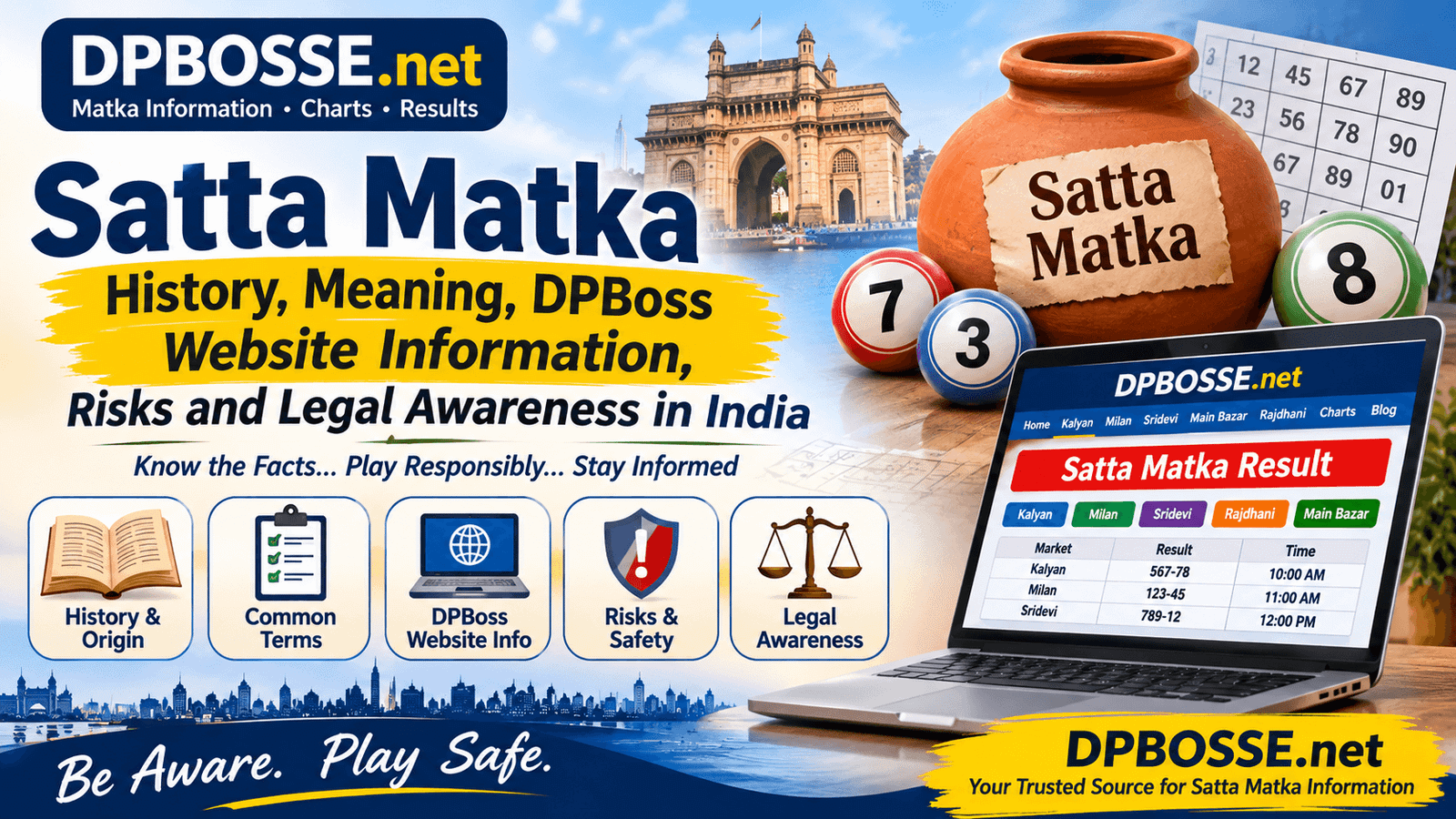
Today, people searching for Satta Matka may come across websites that display market names, result information, historical charts and different types of number records. One such website is DPBOSSE.net , which presents Matka-related information through different sections. Its homepage includes market-wise result displays, Final Ank information, Jodi links, Panel links and other related details.
However, understanding Satta Matka requires more than simply looking at numbers on a screen. Readers should also know where the activity originated, what its common terms mean, how online information is presented and what risks may be associated with gambling-related platforms.
This article provides a detailed introduction to Satta Matka for Indian readers. It also explains the information available on DPBOSSE.net, discusses common misconceptions and highlights the importance of legal awareness and online safety. The purpose is educational. It does not provide betting instructions, number predictions or financial advice.
What Is Satta Matka?
Satta Matka is a traditional form of number-based gambling associated with Indian history. The word “Satta” is generally used in connection with wagering or betting, while “Matka” means an earthen pot.
The activity developed in Bombay, now known as Mumbai, during the twentieth century. Early forms were connected with betting on cotton-market quotations. Later, the system changed towards locally generated number results, and the word Matka became associated with the activity.
As time passed, different market names, result formats and specialised expressions became part of Matka-related terminology. Words such as Jodi, Patti, Panel, Open and Close are still commonly found in online discussions about the subject.
In the digital age, websites have made related information easier to find. Visitors may see historical records, market labels, result tables and archived information on different platforms.
It is important to understand that Satta Matka belongs to a gambling-related context. Historical results cannot guarantee future outcomes, and claims about fixed numbers or assured earnings should not be considered reliable.
History and Origin of Satta Matka
The history of Satta Matka is commonly linked to Mumbai’s cotton trading industry during the 1950s.
During that period, information about cotton prices was transmitted between the New York Cotton Exchange and the Bombay Cotton Exchange. Some people reportedly began placing wagers based on the opening and closing figures of these quotations.
This early practice became associated with the name Ankada Jugar. Participants were interested in the numerical endings of the published cotton rates rather than the actual purchase or sale of cotton.
In 1961, the relevant cotton-rate transmission practice changed. As a result, the earlier system could no longer continue in the same way. Organisers gradually moved towards locally generated number results.
The use of an earthen pot for drawing numbered slips became associated with the later format. This is one commonly reported explanation for why the activity became known as Matka.
Mumbai played an important role in the development of this system. Over time, different market identities and result formats appeared. The activity gradually moved beyond its original local setting and became recognised in different parts of India.
With the arrival of the internet, information that was previously shared through local networks became available on websites. Today, people can find historical articles, terminology guides and Matka-related records online.
Although the format has changed over the years, its gambling-related nature remains an important part of its history.
How DPBOSSE.net Presents Satta Matka Information
DPBOSSE.net is a website focused on Satta Matka-related information. Its homepage displays different market sections and result-related records in an organised layout.
The website includes several types of information that visitors may encounter while exploring its pages.
1. Market-Wise Information
The homepage displays different market names, including Kalyan, Milan, Sridevi, Main Bazar, Rajdhani and other market-related categories.
These names help organise information into separate sections. Each market may have its own displayed records and associated timing information.
2. Result Information
The website includes result-related displays where numerical entries are presented under different market names.
Visitors should understand that these entries are website-published information. They should not automatically assume that every displayed record has been independently verified.
3. Final Ank Section
Final Ank is a term that appears in Matka-related result information. DPBOSSE.net displays this type of information under its market-related sections.
The term should be understood as part of the website’s result vocabulary, not as a prediction of future outcomes.
4. Jodi Chart Links
The website provides Jodi-related links alongside different market sections.
Jodi is a commonly used term in traditional Matka terminology. It generally refers to a two-digit combination.
5. Panel Chart Links
Panel is another familiar term in Matka-related discussions. It generally refers to a three-digit combination.
The website’s Panel links provide a way to access the related chart sections.
6. Market Timing Information
Some market sections display timing details. These details help visitors understand how the website categorises its published information.
However, displayed schedules should not be treated as guaranteed update times. Technical delays, missing records and changes in website information may affect what visitors see.
Overall, DPBOSSE.net uses separate sections to organise market-related information, result displays and chart links. Readers should always check the date, source and context of any information they view.
Common Satta Matka Terms Explained
People who are new to the subject may find its vocabulary confusing. Understanding the general meaning of common terms makes historical articles and website pages easier to read.
Satta
Satta is a commonly used Hindi term associated with betting or wagering. It is often used in discussions about gambling activities.
Matka
Matka means an earthen pot. The term became associated with the traditional number-draw format and is now widely used when discussing this form of gambling.
Jodi
Jodi generally means a pair of digits. It is a familiar term in Matka-related charts and historical records.
Patti or Panna
Patti and Panna are terms used for three-digit number combinations in traditional Matka terminology.
Panel
Panel generally refers to a three-digit combination. Some websites use Panel as a heading for a separate chart section.
Open and Close
Open and Close are commonly used labels in Matka-related result formats. They refer to separate stages or parts of the displayed result information.
Final Ank
Final Ank is a term used for a single-digit entry displayed in some result sections.
Matka Chart
A Matka chart is an organised record of previously published information. It may contain dates, market names and different types of historical entries.
These terms explain the language used on Matka-related websites. Their definitions should not be treated as instructions for participating in gambling.
Understanding Matka Charts and Historical Records
Charts are an important part of the way Matka-related information is presented online. A chart generally organises previous records in a table or another structured format.
For example, a website may arrange historical information by market name or date. This makes it easier to locate an older entry without searching through every page.
A chart may include:
- Market names and related labels.
- Dates of previously published entries.
- Open and Close headings.
- Jodi-related records.
- Panel or Patti-related records.
- Historical information and archived entries.
The main purpose of a historical chart is to preserve and organise previously published information.
However, there is a common misunderstanding about charts. Some people believe that looking at older records can reveal a guaranteed future result. This is not a reliable assumption.
A past result is simply information about something that was previously reported. It does not establish what will happen in the future. Random outcomes cannot be predicted with certainty by looking at repeated numbers, gaps or historical patterns.
Readers should also consider the quality of the source. An old chart may contain missing entries, incorrect dates or information that has not been updated. Therefore, historical records should be treated carefully.
How Digital Platforms Have Changed Matka Information
The internet has changed how people access information about traditional activities. Satta Matka-related content has also moved from local communication networks to online platforms.
Earlier, information was commonly shared through physical contacts, local records and other traditional communication methods. Today, websites can publish market-related information and historical records in a central location.
This change has made information easier to access. Visitors can find different pages through search engines and read about terminology without depending entirely on printed material.
Digital platforms also create certain challenges.
First, not every website has the same ownership or source of information. Similar website names do not automatically mean that the platforms are connected.
Second, some websites may publish promotional claims alongside historical information. Readers should distinguish between factual explanations and marketing statements.
Third, information can be copied from one website to another. As a result, the same incorrect entry may appear across multiple pages.
A responsible reader should check website details, publication dates, privacy information and relevant disclaimers before trusting online content.
Financial and Personal Risks Associated With Satta Matka
One of the most important aspects of Satta Matka is the financial risk associated with gambling.
Some online pages may use attractive language such as fixed numbers, guaranteed results, sure-shot predictions or easy income. Such claims can create unrealistic expectations, especially among people who are unfamiliar with gambling-related risks.
There is no dependable way to guarantee earnings from random gambling outcomes.
People may also make financial decisions based on the hope of recovering previous losses. This can increase financial pressure and affect household budgets.
Some common risks include:
Financial losses: Money spent on gambling may be lost. Repeated attempts to recover losses can create further problems.
False promises: Claims about guaranteed results or secret prediction methods may be misleading.
Online scams: Unknown individuals may use Matka-related names to request payments or personal information.
Privacy concerns: Sharing phone numbers, banking details, passwords or OTPs with unverified contacts can create security problems.
Emotional pressure: Repeated gambling-related activity may cause stress and affect family or professional responsibilities.
Readers should never share an OTP, UPI PIN, password or banking credentials with an unknown person. They should also avoid sending money to individuals who promise guaranteed results.
Is Satta Matka Legal in India?
The legal position of gambling in India is an important subject, and readers should not rely on outdated online articles for legal information.
India’s gambling-related legal framework has historically involved state-level laws. The applicable position can depend on the activity, location and relevant legislation.
There has also been a significant national development concerning online money games.
The Promotion and Regulation of Online Gaming Act, 2025, establishes prohibitions concerning online money games. The law addresses their offering, advertising, promotion, facilitation and related financial transactions.
The Promotion and Regulation of Online Gaming Rules, 2026 came into force on 1 May 2026, according to the Government of India.
This legal development is important for anyone researching online gambling-related websites. Readers should not assume that an activity is permitted simply because a website is accessible or appears in search results.
A website disclaimer does not automatically determine whether an activity is lawful. The actual nature of the service and the applicable law must be considered.
For accurate legal guidance, readers should consult current official government notifications or a qualified legal professional.
How to Stay Safe While Browsing Matka-Related Websites
Online safety is important whenever a website discusses gambling-related information.
Visitors should take a careful approach and avoid trusting every claim displayed on a webpage.
Here are some useful digital safety practices:
Check website information: Look for clear ownership details, contact information and privacy policies.
Avoid guaranteed-result claims: No website should be treated as a reliable source of guaranteed future gambling outcomes.
Protect personal details: Never share passwords, OTPs, UPI PINs or banking credentials with unknown contacts.
Be careful with payment requests: Unverified payment demands may be connected with scams or other risks.
Check information dates: Historical entries should have clear dates and should not be presented as current information without verification.
Understand the law: Read current official information before interacting with any online money-related service.
Do not risk essential savings: Gambling can result in financial loss and should never be treated as a dependable source of income.
These practices help readers make informed decisions and protect their personal information online.
Why Clear and Responsible Information Matters
Websites that publish information about Satta Matka should use clear language and explain the purpose of their pages.
For example, a historical chart page should explain that it contains previous records. A terminology article should define words without presenting them as prediction methods.
Similarly, a website should avoid exaggerated statements about guaranteed income, fixed results or certain financial returns.
Clear headings, short paragraphs and simple explanations make information easier to understand. They also help visitors find relevant sections without confusion.
For a website such as DPBOSSE.net, explaining market names, chart terminology, historical information and online safety can provide useful context to readers.
Responsible content should also make the difference between historical information and gambling participation clear.
Frequently Asked Questions About Satta Matka
1. What is Satta Matka?
Satta Matka is a traditional number-based gambling activity associated with Indian history. It developed from earlier betting practices connected with cotton-market quotations in Bombay.
2. Where did Satta Matka originate?
Its commonly reported history is linked to Bombay, now Mumbai, during the 1950s. The activity later developed into a locally organised number-based format.
3. What does the word Matka mean?
Matka means an earthen pot. The word became associated with the traditional number-draw format.
4. What is a Jodi in Satta Matka terminology?
Jodi generally refers to a pair of digits. It is a commonly used term in Matka-related charts and records.
5. What is a Panel Chart?
A Panel Chart is a chart section associated with three-digit combinations in traditional Matka terminology.
6. What is Final Ank?
Final Ank is a term used for a single-digit entry displayed in some Matka-related result sections.
7. What information is available on DPBOSSE.net?
The website displays Matka-related market sections, result information, Final Ank entries, Jodi links, Panel links and associated timing details.
8. Can historical Matka charts predict future results?
No. Historical charts contain previously published information. They cannot guarantee or reliably predict future random outcomes.
9. Is online Satta Matka legal in India?
India’s legal framework has changed significantly. The Promotion and Regulation of Online Gaming Act, 2025 and the 2026 Rules address online money games. Readers should consult current official legal information for the applicable position.
10. How can visitors protect themselves from online scams?
Visitors should avoid guaranteed-result claims, protect their banking information, never share OTPs or passwords and be careful with payment requests from unknown contacts.
Conclusion
Satta Matka has a long history in India, particularly in connection with Mumbai’s earlier cotton-market betting practices. Over the years, it developed its own terminology, market identities and result formats. Today, the subject is also discussed through digital platforms that publish historical information, charts and related explanations.
DPBOSSE.net presents different Matka-related sections, including market names, result displays, Final Ank information, Jodi links and Panel links. Understanding these sections can help readers interpret the website’s published information more clearly.
At the same time, it is important to recognise that historical records cannot guarantee future outcomes. Gambling can involve financial, personal and legal risks, and online claims about fixed numbers or assured income should be treated with caution.
Readers should protect their personal information, understand the current legal framework and avoid relying on gambling as a source of income.
The best way to approach Satta Matka-related online content is through historical understanding, accurate information and responsible digital awareness.