
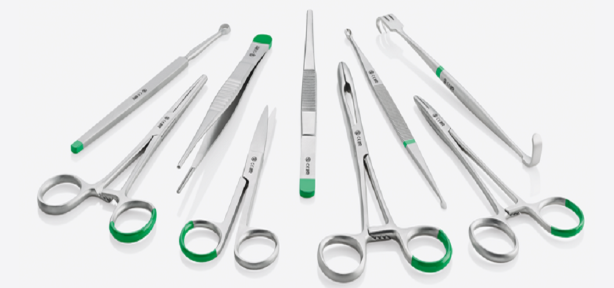
Surgical environments operate on consistency, precision, and reliability, where every instrument contributes directly to procedural success. The effectiveness of a surgery is not only determined by the surgeon’s expertise but also by the quality and suitability of the tools used throughout the process. From initial incision to final closure, instruments must perform with predictable accuracy under controlled conditions.
Within this context, identifying the top general surgery instrument involves understanding how a complete, well-engineered set functions together rather than focusing on a single tool. Modern surgical setups rely on a combination of conventional instruments and advanced minimally invasive devices, all designed to support clinical efficiency while maintaining strict compliance with sterilization and safety standards.
Core Categories That Define Surgical Instrumentation
Surgical instruments are categorized based on their role during procedures, allowing teams to maintain workflow clarity and reduce operational delays. This classification ensures that each stage of surgery is supported by tools specifically designed for that purpose.
Broadly, instruments fall into cutting, grasping, retracting, and suturing categories, but modern setups extend beyond these to include laparoscopic and endoscopic systems. This expanded range reflects the shift toward minimally invasive procedures, where precision tools operate through smaller access points while maintaining visibility and control.
Cutting and Dissecting Instruments
Cutting instruments such as scalpels and surgical scissors are engineered for controlled incisions and tissue separation. Their sharpness and balance allow surgeons to perform delicate dissections without compromising surrounding structures.
Grasping and Holding Instruments
Forceps and clamps provide stability during tissue handling and hemostasis. Their design ensures firm grip without excessive pressure, which is essential for maintaining tissue integrity during procedures.
Retracting Instruments
Retractors are used to hold tissues apart, ensuring clear visibility of the surgical field. Their structural strength and ergonomic design contribute to maintaining consistent exposure throughout the operation.
Suturing and Stapling Instruments
Needle holders and stapling devices are critical for wound closure. These instruments must deliver precision and control to support proper healing and minimize postoperative complications.
Material Composition and Quality Assurance Standards
The durability and performance of surgical instruments are largely determined by the materials used in their construction. High-grade stainless steel, particularly variants such as 410 and 420, is widely utilized due to its strength, corrosion resistance, and compatibility with repeated sterilization cycles.
Equally important are the quality assurance processes that govern manufacturing. Certified production standards such as ISO 13485:2016, ISO 9001:2015, CE marking, and FDA compliance ensure that instruments meet international safety and performance benchmarks. These certifications are not merely formalities but indicators of consistent manufacturing practices and reliable product output.
Expanding Role of Minimally Invasive Surgical Equipment
Modern surgical practice increasingly incorporates minimally invasive techniques, which require specialized instruments beyond traditional sets. Laparoscopic tools such as graspers, trocars, and clip applicators enable surgeons to perform procedures through small incisions while maintaining high precision.
Endoscopic equipment, including laparoscopes, cystoscopes, and arthroscopes, enhances visualization and diagnostic capability. These instruments are designed to integrate seamlessly with imaging systems, allowing for accurate navigation within the body and reducing recovery time for patients.
Ergonomics and Workflow Efficiency in Operating Rooms
Instrument design significantly impacts surgeon comfort and procedural efficiency. Ergonomic considerations such as grip texture, weight distribution, and handle design reduce fatigue and enhance control during extended procedures.
Efficient workflow is achieved when instruments are intuitive to use and aligned with surgical sequences. Well-designed tools enable seamless transitions between procedural stages, minimizing interruptions and maintaining focus within the operating room.
Procurement Considerations for Healthcare Facilities
Selecting surgical instruments involves more than evaluating individual tools. Hospitals and procurement teams must consider consistency, supplier reliability, and long-term usability when building instrument sets.
Standardized sets ensure readiness for common procedures, while customized configurations address specialized surgical needs. Factors such as bulk availability, compliance with international standards, and durable construction play a key role in procurement decisions.
Standardization in Instrument Sets
Standardized instrument sets simplify preparation and reduce the risk of missing essential tools. They support consistent surgical outcomes by ensuring that all necessary instruments are readily available.
Customization for Specialized Procedures
Certain procedures require tailored instrument configurations. Customization allows healthcare providers to align equipment with specific surgical requirements without compromising efficiency.
Balancing Quality and Cost
Investing in high-quality instruments often results in long-term cost efficiency. Durable tools reduce the need for frequent replacement and maintain consistent performance over time.
Supplier Reliability and Compliance
Reliable suppliers provide instruments that meet regulatory standards and maintain consistent quality across batches. This reliability is essential for ensuring safety and operational continuity.
Key Instruments Commonly Used in General Surgery
A standard surgical setup includes a wide array of instruments designed for different procedural stages. These tools form the backbone of general surgery and are indispensable in achieving precise outcomes.
Commonly used instruments include scalpels, scissors, forceps, retractors, and needle holders, along with specialized devices used in minimally invasive and diagnostic procedures. Each instrument is designed with a specific function, contributing to the overall efficiency of the surgical process.
Scalpel Variants
Scalpels are available in multiple blade configurations, each suited for specific types of incisions. Their precision and sharpness are critical for initiating surgical procedures effectively.
Surgical Scissors
Surgical scissors are designed for cutting tissues and sutures with controlled accuracy. Different variations allow surgeons to handle diverse procedural requirements.
Forceps and Clamps
Forceps and clamps provide stability during tissue handling and help control bleeding. Their versatility makes them essential in nearly every surgical procedure.
Needle Holders
Needle holders enable precise suturing by offering a secure grip on needles. Their design supports accurate wound closure and promotes effective healing.
Final Thoughts
Building a reliable surgical setup requires more than assembling tools, it demands a structured approach to quality, consistency, and clinical relevance. A well-prepared general surgery equipment list ensures that surgical teams can operate with confidence, supported by instruments that perform reliably across procedures.For institutions evaluating dependable manufacturing partners, Salwan Surgicare operates with a broad portfolio that includes general surgical instruments, laparoscopic tools, endoscopy equipment, orthopedic devices, and hospital holloware. Backed by certified production standards and an extensive catalog, the company aligns its offerings with the operational needs of hospitals and procurement teams seeking durability, compliance, and consistent supply.