
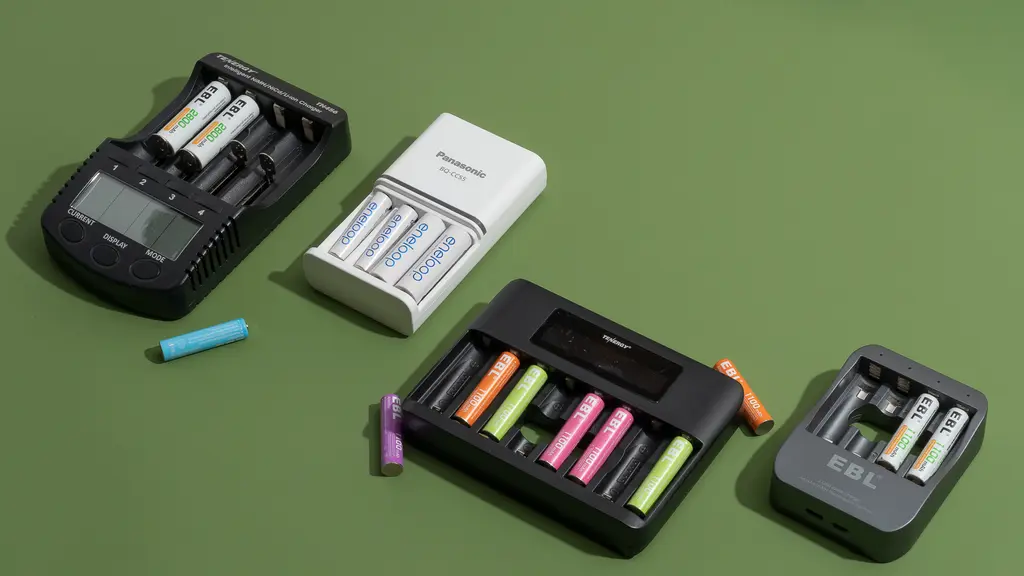
We often view power as a simple commodity—something that flows from a wall and fills up our devices. But when it comes to keeping your electronics alive, the rechargeable battery charger is far more than a plastic cradle with a plug. It is the sophisticated gatekeeper of your battery’s health.
If you think of a battery as a fuel tank, a cheap charger is like a high-pressure fire hose that doesn’t know when to stop. A high-quality rechargeable battery charger, however, is like a precision fuel injector. It understands the “thirst” of each individual cell and adjusts the flow of energy to ensure the battery is filled to the brim without being damaged. Just as hearing aid batteries rely on specialized zinc-air technology to pull oxygen from the atmosphere for maximum energy density, your household rechargeables rely on the intelligence of their charger to maintain their chemical integrity.

The Hidden Intelligence of a Modern Rechargeable Battery Charger
The primary job of any rechargeable battery charger is to manage a complex chemical transition. When a battery is charging, it isn’t just “filling up”; it is undergoing a reversible chemical reaction. If the charger pushes too much current too fast, the internal resistance of the battery generates heat. According to Joule’s First Law, the heat produced is calculated as:
$$Q = I^2 \cdot R \cdot t$$
Where $Q$ is heat, $I$ is current, $R$ is resistance, and $t$ is time. A smart rechargeable battery charger monitors these variables in real-time to prevent the battery from “cooking” its own internal components.
How a Smart Rechargeable Battery Charger Prevents Overheating
Heat is the absolute enemy of battery longevity. In the world of Nickel-Metal Hydride (NiMH) cells, a quality rechargeable battery charger uses a method called “Negative Delta V” detection. As a battery reaches its full capacity, its voltage actually drops slightly. A “dumb” charger will miss this tiny signal and keep pumping power, leading to overheating. A smart rechargeable battery charger detects this microscopic dip and immediately switches to a “trickle charge,” effectively putting the battery in a safe resting state.
Individual Channel Monitoring in a Rechargeable Battery Charger
Many of the cheapest units on the market charge batteries in pairs. This is a recipe for disaster. If one battery is half-full and the other is empty, the charger will often overcharge the first while trying to fill the second. A superior rechargeable battery charger features independent channels. This means every single slot has its own dedicated “brain,” ensuring that each cell receives exactly what it needs, regardless of what its neighbor is doing.
Reddit and Quora Insights on Choosing a Rechargeable Battery Charger
To understand the real-world value of a good charger, you only need to look at the communities of enthusiasts on Reddit and Quora. These users have spent years testing hardware, and their stories highlight why the “commodity” mindset can be expensive in the long run.
On the r/flashlight and r/batteries subreddits, a common piece of advice is: “Spend more on the charger than the batteries.” One user, u/VoltageViking, shared a story from early 2026 about a cheap “bundled” charger he received with some off-brand cells. “I thought I was saving money,” he wrote. “But after three months, my expensive Eneloops were only holding half their charge. I switched to a dedicated rechargeable battery charger with a ‘Refresh’ mode, and it literally brought those dead cells back to life by cycling them properly.”
Real-World Failures of the Cheap Rechargeable Battery Charger
On Quora, a professional photographer described a “near-miss” where a low-quality rechargeable battery charger caused a battery to leak inside the unit during a frantic overnight charge before a wedding. The lesson learned? A charger without thermal protection isn’t just a slow charger; it’s a liability.
The community consensus is clear: if you are using a battery charger for rechargeable batteries, look for a screen that shows you the actual capacity (mAh) being put back into the cell. This transparency allows you to spot a failing battery before it ruins your device.
Finding the Best Battery Charger for Rechargeable Batteries
When you are hunting for a battery charger for rechargeable batteries, you want to look for features that prioritize “life over speed.” While “15-minute ultra-fast” chargers sound convenient, they often use high currents that significantly shorten the total number of cycles a battery can survive.
The Cost-Saving Logic of a High-End Rechargeable Battery Charger
It might feel strange to pay $40 or $50 for a rechargeable battery charger when a basic one costs $10. However, the math favors the investment. A high-end charger can extend the life of your batteries from 300 cycles to over 1,000 cycles. If you are powering high-drain devices like a VR controller or a high-end RC car, the efficiency of a quality rechargeable battery charger isn’t just a benefit—it’s a requirement for your wallet.
Why Manual Control Matters in a Rechargeable Battery Charger
For the power user, the ability to manually select the charging current is a game-changer. Lower currents (like 200mA or 500mA) are much “gentler” on the battery’s internal chemistry. By using a rechargeable battery charger that lets you slow down the process, you are essentially ensuring that your long lasting rechargeable batteries actually live up to their name.
In the end, your batteries are only as good as the device that feeds them. By moving away from “dumb” chargers and investing in a smart rechargeable battery charger, you turn a disposable habit into a sustainable, high-performance system.